


































First Blockbuster Video Store Opens in Dallas

Links
blockbuster.comOct 19, 1985
Saturday
Oct 19, 1985
Date TypesLaunches and Openings
CompaniesBlockbuster Video
People / Bands / TeamsDavid Cook, John Melk, Ray Kroc, Wayne Huizenga
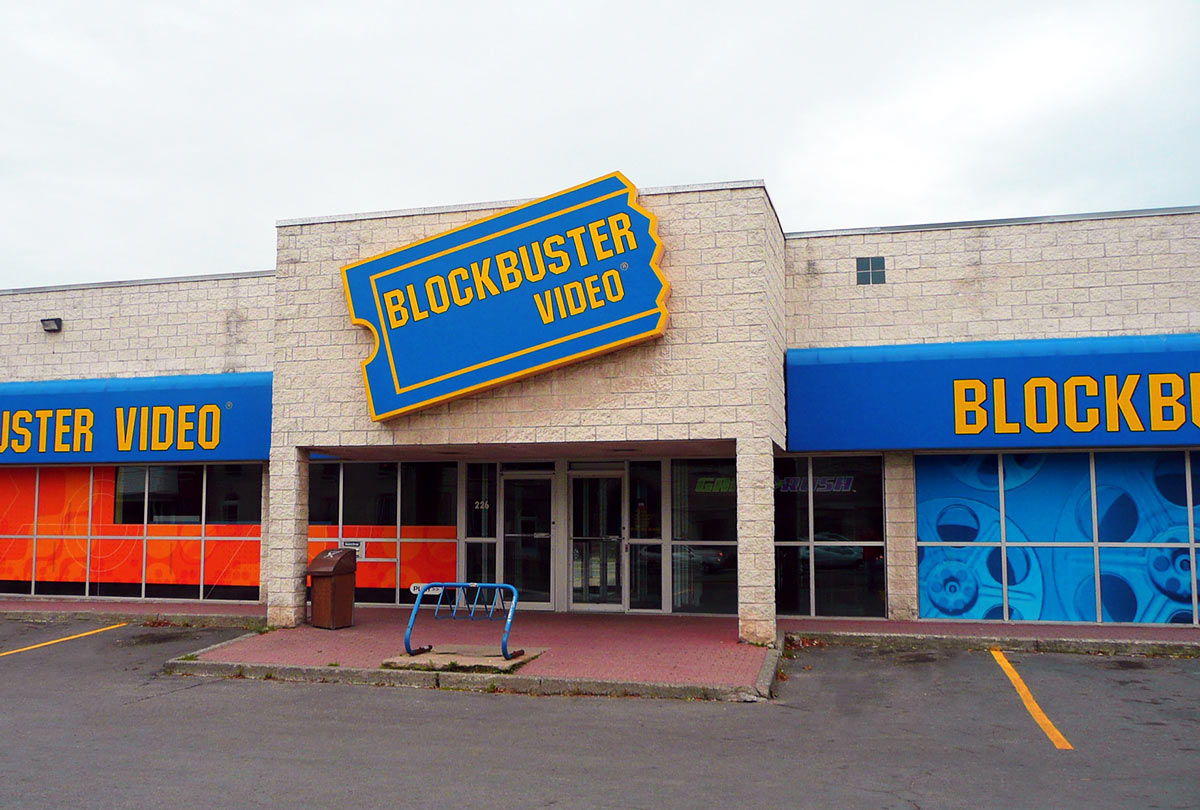 Iconic videotape rental chain Blockbuster has its roots based with another company that was called Cook Data Services, founded by David Cook in 1978. Cook Data supplied software services to the oil and gas industries in Texas, but it was unsuccessful.
David’s wife Sandy Cook, wanted to get into the video business, and her husband would soon study the industry and its prospects. Using profit he made from the sale of a subsidiary of Cook Data Services, he decided to buy into a video store franchise in Dallas called Video Works. When Video Works refused to allow Cook to decorate the interior of his store with a blue-and-yellow design, he left the franchise and opened the first Blockbuster Video in 1985.
The first Blockbuster Video store opened on October 19, 1985, in Dallas, Texas, with an inventory of 8,000 VHS and 2,000 Beta tapes. Following early success from the company’s first stores, Cook built a $6-million warehouse in Garland, Texas, to help sustain and support future growth, allowing for new stores to open quickly. Blockbuster would often custom-tailor a store’s inventory to its neighborhood, based on local demographics.
In 1987, Waste Management co-founder Wayne Huizenga agreed to acquire several Blockbuster stores. At that time, there were 19 stores, attracting Huizenga’s associate John Melk’s attention due to its efficiency, family-friendly no porn image and business model. Huizenga and Melk utilized techniques from their waste business and Ray Kroc’s model of expansion to rapidly expand Blockbuster, and soon they were opening a new store every 24 hours.
At its peak in 2004, Blockbuster had more than 9,000 stores worldwide, allowing the chain to go public and become one of the most successful media businesses of its time. However, changing tastes and technologies led to serious financial issues. On July 1, 2010, the company was delisted from the New York Stock Exchange (NYSE) after its shareholders failed to pass a reverse stock split plan aimed at heading off involuntary delisting because of the stock’s trading well below $1 per share.
Signs of trouble continued to rise when Blockbuster was unable to make a $42.4 million interest payment to bondholders in August of 2010, leading the company to attempt a restructuring and recapitalization. After that failed, news media reported that Blockbuster was planning to file a pre-packaged Chapter 11 bankruptcy in mid-September of the same year. The formerly great video behemoth proceeded to file for Chapter 11 bankruptcy protection due to heavy losses, $900 million in debt, and competition from Netflix, Redbox, and video on-demand services.
Add FanCalendar as a preferred source on Google to never miss an update!